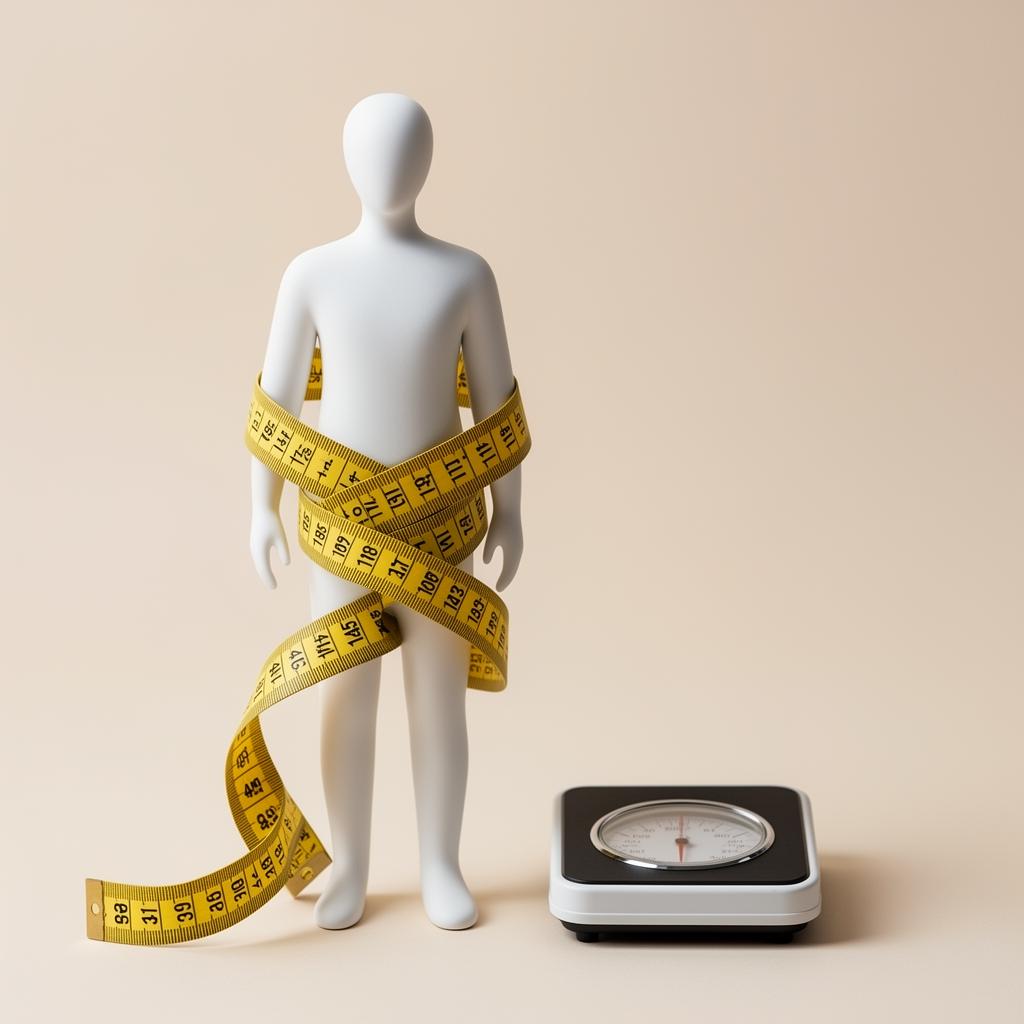
If you've had a check-up in the last twenty years, a nurse has probably weighed you, measured your height, and circled a number on a chart. That number is your Body Mass Index, and depending on which side of an arbitrary line it falls on, you walked out either feeling fine or feeling judged. The truth is messier — and a lot more interesting.
What BMI actually is
BMI = weight in kilograms ÷ height in meters squared. That's it. It puts adults into four buckets: under 18.5 (underweight), 18.5–24.9 (normal), 25–29.9 (overweight), 30 or above (obese). It was invented in the 1830s by a Belgian statistician named Adolphe Quetelet, and — this matters — he created it to describe populations, not individuals. We've been ignoring that footnote ever since.
What it's actually good at
Across millions of people, BMI does correlate with cardiovascular risk, type-2 diabetes, and joint problems. It's free, takes ten seconds, and needs no equipment. For a public-health system trying to spot trends, that's hard to beat. So it's not useless. It's just being asked to do a job it was never designed for.
Where it falls apart
BMI cannot tell muscle from fat. An Olympic sprinter often scores 'overweight' or even 'obese' on paper while carrying single-digit body fat. The mirror image is 'normal-weight obesity': someone whose BMI looks perfectly fine but who carries dangerous amounts of visceral fat around the organs.
It also struggles with kids, the elderly, very tall or very short people, and certain ethnicities. South and East Asian populations, for example, tend to face elevated cardiometabolic risk at BMIs that look reassuring on a European chart.
What I'd track instead (or alongside)
Three numbers give a much fuller picture, and none of them cost anything.
First, **waist circumference**. Measure at the navel, standing relaxed (no sucking in). Above 102 cm (40 in) for men or 88 cm (35 in) for women is a louder warning signal than BMI alone.
Second, **waist-to-height ratio**. Anything above 0.5 suggests too much abdominal fat. 'Your waist should be less than half your height' fits on a sticky note and is well validated in the research.
Third, **body fat percentage**. The U.S. Navy tape-measure method gets you within about 3% for free. If you want more precision, DEXA and hydrostatic weighing exist, but they cost money.
How to use the BMI calculator without overreacting
Treat our BMI calculator as a 30-second screen, not a verdict. If you land in 'overweight' or 'obese', take the extra two minutes to measure your waist and estimate body fat before you draw any conclusion. If you land in 'normal' but feel out of shape, the same advice runs the other way.
Bottom line
BMI is a useful first glance, not a diagnosis. Pair it with a tape measure and a body-fat estimate and you'll have a number that reflects your health — not just your geometry.