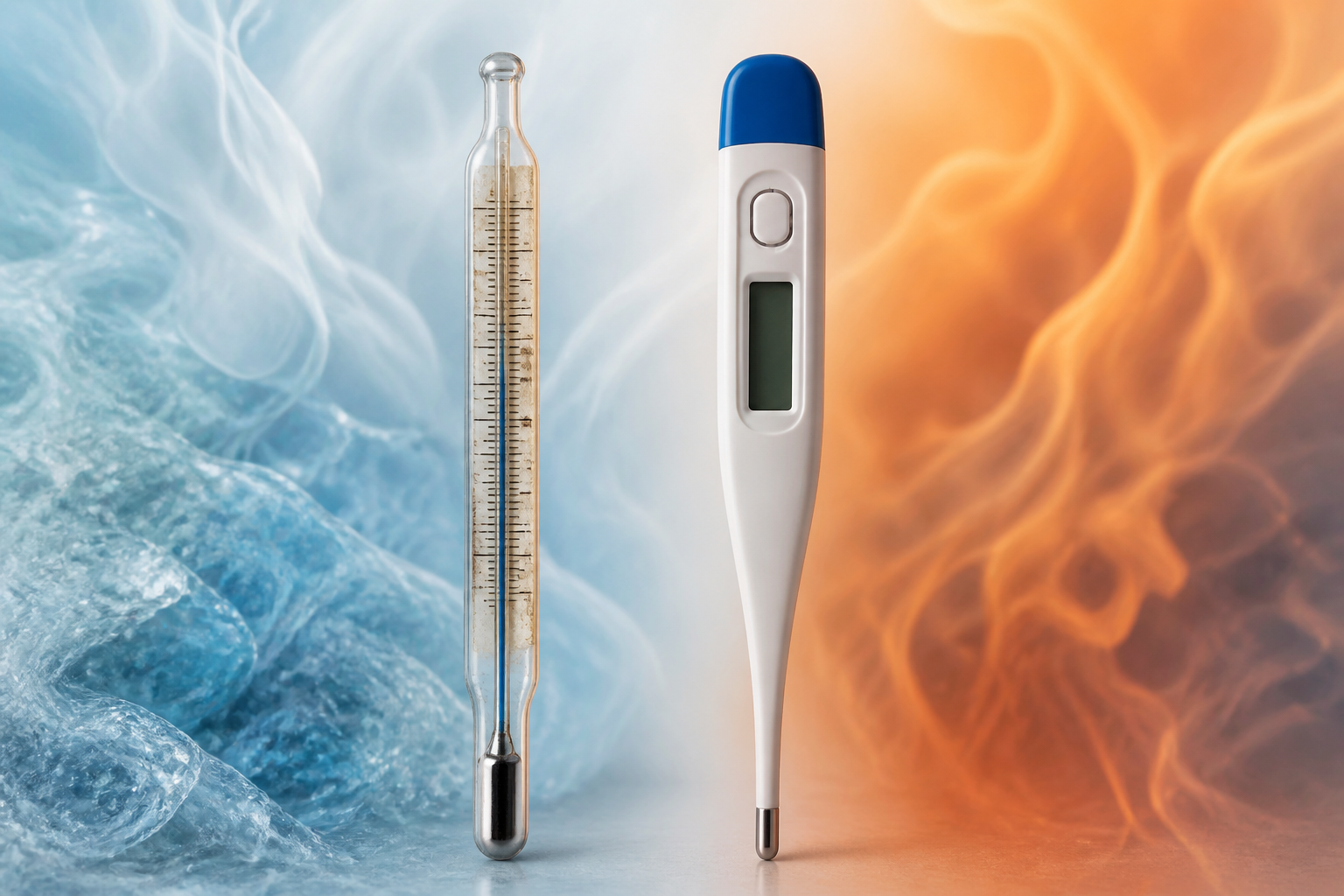
Temperature is one of the most fundamental measurements we encounter daily, yet its units can often be a source of confusion. From checking the weather forecast to understanding scientific reports, we frequently encounter Celsius, Fahrenheit, and Kelvin. Knowing how to convert between these scales is more than just a party trick; it's essential for clear communication and accurate understanding.
The three primary temperature scales each have a unique history and application. Fahrenheit, primarily used in the United States, uses 32°F as the freezing point of water and 212°F as the boiling point. Celsius, the standard in most of the world and in scientific contexts, sets these points at 0°C and 100°C respectively. Kelvin, or the absolute temperature scale, is crucial in scientific fields, with 0 Kelvin representing absolute zero, the theoretical point where all molecular motion ceases.
Understanding the relationship between these scales allows for seamless communication across different regions and disciplines. If you're planning a trip abroad, knowing that 25°C is a comfortable 77°F can help you pack appropriately. Similarly, scientists worldwide rely on consistent temperature measurements, often using Kelvin for precise calculations, especially in thermodynamics and cryogenics.
The Celsius Scale: Our Global Standard
The Celsius scale, also known as centigrade, is intuitive for many because it conveniently places the freezing point of water at 0° and the boiling point at 100° at standard atmospheric pressure. This makes it easy to conceptualize everyday temperatures. Most countries outside the United States use Celsius for weather forecasts, oven temperatures, and industrial applications.
The Fahrenheit Scale: A Familiar Friend in the US
In the United States, Fahrenheit remains the dominant temperature scale. While it might seem less straightforward with its freezing point at 32°F and boiling point at 212°F, many Americans are accustomed to its finer distinctions for ambient air temperatures. A change of one degree Fahrenheit is a smaller increment than a degree Celsius, which some find more precise for daily weather readings.
The Kelvin Scale: The Scientist's Choice
Unlike Celsius and Fahrenheit, the Kelvin scale is an absolute thermodynamic temperature scale. This means it doesn't have "degrees" in the same way; rather, temperature is measured in Kelvins. Its zero point, 0 K, corresponds to absolute zero (-273.15°C or -459.67°F), where all thermal motion of particles theoretically stops. This makes Kelvin invaluable in physics and chemistry for measuring extreme cold and for calculations that require proportional relationships between temperature and other physical quantities.
How to Convert Between Scales
Converting between these scales involves simple formulas. To go from Celsius to Fahrenheit, you multiply the Celsius temperature by 9/5 (or 1.8) and then add 32. For example, 20°C becomes (20 * 1.8) + 32 = 68°F. To convert Fahrenheit to Celsius, subtract 32 from the Fahrenheit temperature, then multiply by 5/9. So, 68°F becomes (68 - 32) * 5/9 = 20°C.
Converting between Celsius and Kelvin is even simpler. To get Kelvin from Celsius, you just add 273.15 to the Celsius temperature. Therefore, 20°C is 293.15 K. To go from Kelvin to Celsius, subtract 273.15. This direct relationship highlights Kelvin's scientific utility, as a change of one degree Celsius is equal to a change of one Kelvin.
Remembering these formulas on the fly isn't always practical. That's where our handy CalcBox Temperature Converter comes in. Whether you need to quickly check local temperatures while traveling, or perform precise scientific conversions, our free tool at /calculators/temperature-converter simplifies the process for you. Just input your known temperature and select your desired output scale for instant results.
Everyday Applications of Temperature Conversion
Beyond travel and science, understanding temperature conversion has many practical uses. Cooking often involves recipes from different countries, some using Celsius, others Fahrenheit. Gardening guides might specify optimal growing temperatures in one scale, while your thermometer reads another. In engineering and manufacturing, precise temperature control and conversion are critical for material integrity and process efficiency. Being able to convert accurately ensures better outcomes in all these scenarios.