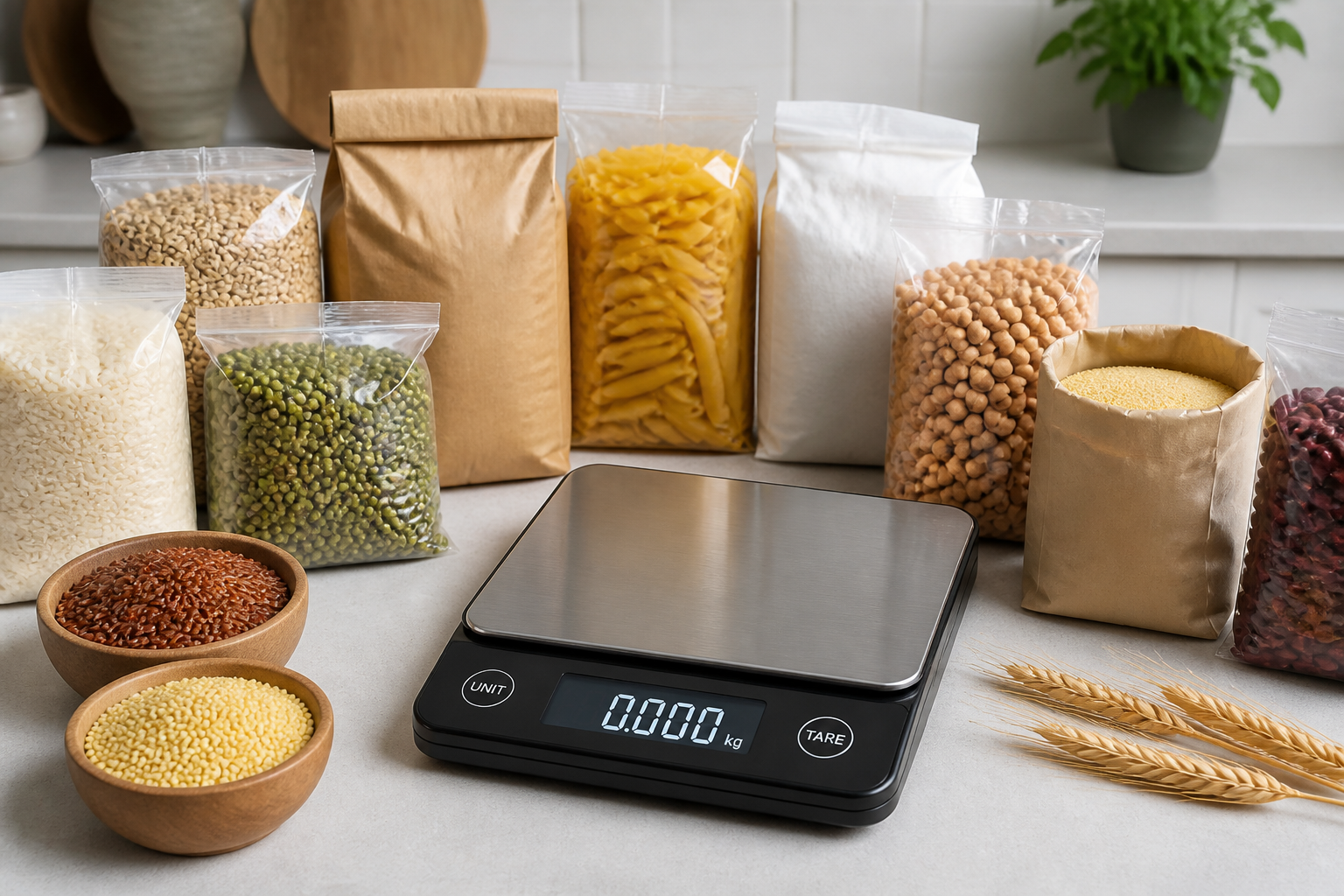
Weight is a fundamental measurement we encounter daily, from buying groceries to understanding our own body mass. However, navigating different units of weight, such as kilograms, pounds, grams, and ounces, can sometimes feel like learning a new language. While the metric system uses kilograms and grams, the imperial system often relies on pounds and ounces. Understanding how to convert between these units is not just a mathematical exercise; it's a practical skill that simplifies international travel, cooking, and even scientific work.
Imagine you're following a recipe from a European cookbook that lists ingredients in grams, but your kitchen scale only measures in ounces. Or perhaps you're buying a product online from the US, and the shipping weight is given in pounds, but you think in kilograms. These scenarios highlight the everyday need for accurate weight conversion. Our CalcBox weight converter tool, available at /calculators/weight-converter, makes these calculations quick and easy, ensuring you get the right numbers every time.
The Metric System: Kilograms and Grams
The metric system is a decimal-based system of measurement used by most countries worldwide. Its simplicity lies in its base units and prefixes that denote powers of ten. For weight, the base unit is the gram (g), though the kilogram (kg) is more commonly used for everyday measurements. One kilogram is precisely 1,000 grams. This straightforward relationship makes conversions within the metric system very intuitive.
For example, if you have 2.5 kilograms of flour, you automatically know that's 2,500 grams (2.5 x 1,000). Conversely, 500 grams is 0.5 kilograms (500 / 1,000). This logical structure is one of the main reasons the metric system is favored in scientific and international trade contexts.
The Imperial System: Pounds and Ounces
The imperial system, primarily used in the United States and a few other countries, employs pounds (lb) and ounces (oz) for measuring weight. Unlike the metric system, the relationship between these units isn't based on powers of ten, which can sometimes make conversions a bit less intuitive. There are 16 ounces in 1 pound.
This means if you have 3 pounds of meat, you have 48 ounces (3 x 16). If a package weighs 20 ounces, you divide by 16 to find its weight in pounds: 20 / 16 = 1.25 pounds. Understanding this 16-to-1 ratio is crucial for accurate conversions within the imperial system.
Converting Between Systems: Kilograms and Pounds
The most common conversion challenge arises when moving between the metric and imperial systems. The key conversion factors to remember are:
One kilogram is approximately 2.20462 pounds. One pound is approximately 0.453592 kilograms.
Let's put this into practice. If you want to convert 75 kilograms into pounds, you would multiply 75 by 2.20462, which gives you approximately 165.3465 pounds. Conversely, if you have a 10-pound dumbbell and want to know its weight in kilograms, you multiply 10 by 0.453592, resulting in roughly 4.53592 kilograms. These conversions are vital for international shipping, body weight tracking, and even understanding nutritional information on imported goods.
Grams and Ounces: Precision in Small Measurements
When dealing with smaller quantities, especially in cooking, baking, or pharmaceuticals, converting between grams and ounces becomes essential. Here are the approximate conversion factors:
One gram is approximately 0.035274 ounces. One ounce is approximately 28.3495 grams.
Consider a recipe calling for 150 grams of chocolate chips, but your measuring tools are in ounces. You would multiply 150 by 0.035274, which yields approximately 5.29 ounces. If you have 4 ounces of herbs and need to know the gram equivalent, you multiply 4 by 28.3495, resulting in about 113.398 grams. Accuracy in these smaller measurements can significantly impact the outcome, especially in baking where precise ratios are critical.
Why Accuracy in Conversion Matters
In many situations, "close enough" simply isn't good enough. In scientific experiments, medical dosages, or complex engineering projects, even minor discrepancies in weight measurements can lead to significant errors or safety hazards. For instance, pharmaceutical companies rigorously convert weights to ensure correct ingredient proportions in medications. Similarly, architects and engineers must accurately convert material weights to maintain structural integrity and safety standards.
Beyond these critical applications, accurate weight conversion enhances our understanding of the world around us. It allows us to compare product sizes across different countries, interpret global data, and make informed decisions, whether it's about fitness goals or international trade. Using a reliable tool like the CalcBox weight converter ensures that your conversions are always precise and dependable.
Practical Examples of Weight Conversion
Let's walk through a few more examples to solidify your understanding:
1. **You're traveling to Europe and need to weigh your suitcase.** The airline limit is 23 kg. Your scale only reads in pounds. How many pounds is that?
Calculation: 23 kg * 2.20462 lb/kg = 50.70626 pounds. So, your suitcase must be under approximately 50.7 pounds.
2. **A recipe calls for 8 ounces of chicken, but your digital scale only measures in grams.** How many grams do you need?
Calculation: 8 oz * 28.3495 g/oz = 226.796 grams. You need roughly 227 grams of chicken.
3. **You buy a package of coffee from the UK that states "Net Weight: 340g."** You want to know how many pounds that is.
Calculation: 340 g / 1000 g/kg = 0.34 kg. Then, 0.34 kg * 2.20462 lb/kg = 0.7495708 pounds. Or, 340g * 0.00220462 lb/g = 0.7495708 pounds. It's just under three-quarters of a pound.
These examples demonstrate the versatility and necessity of mastering weight conversion. Whether for personal or professional use, a solid grasp of these principles, combined with a handy tool like the CalcBox converter, empowers you to navigate different measurement systems with confidence and accuracy. Remember, precision in measurement leads to better outcomes in almost every aspect of life.