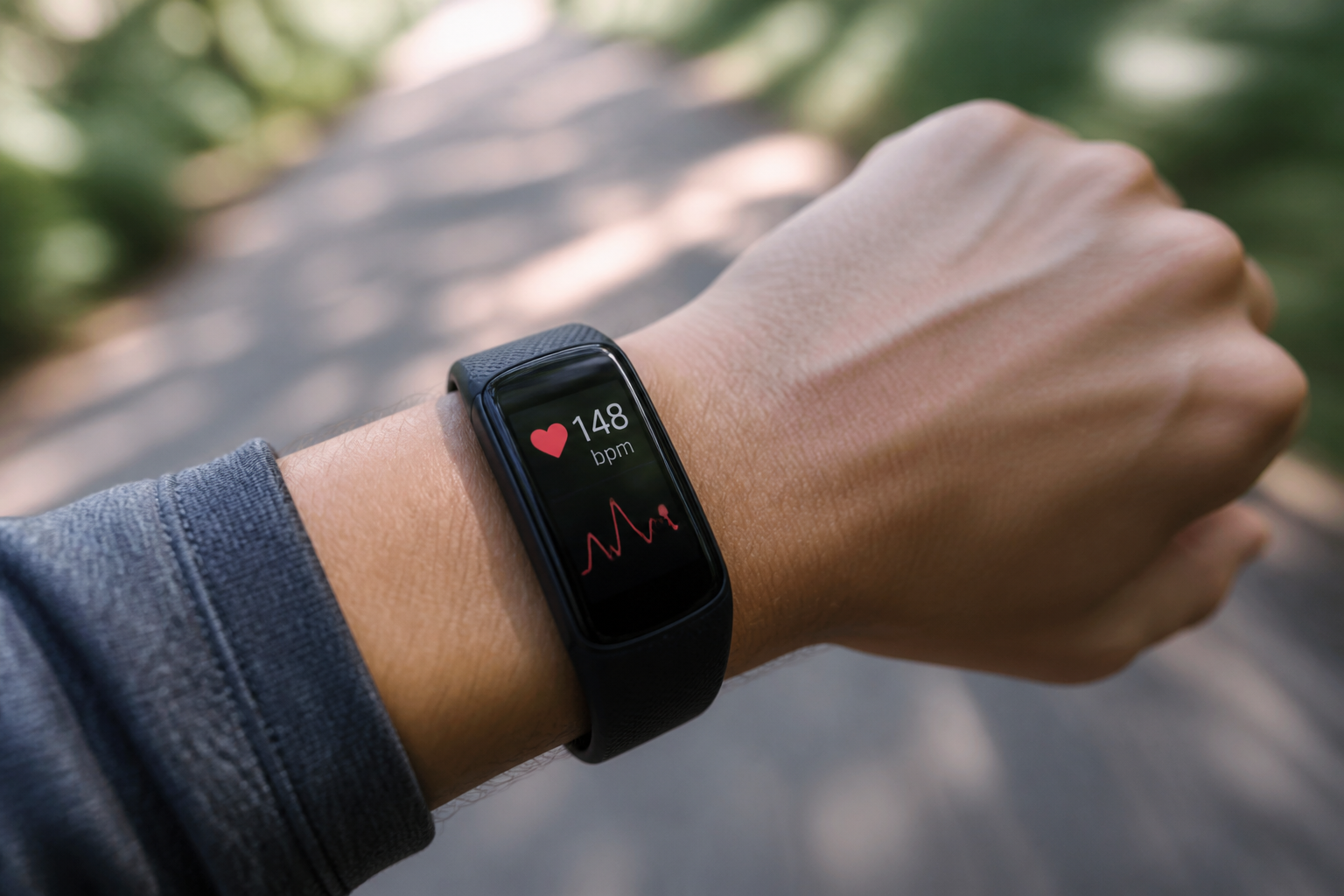
When you're working out, have you ever wondered if you're pushing yourself hard enough, or perhaps too hard? Your heart rate holds the key to answering that question. Understanding your target heart rate isn't just for elite athletes; it's a fundamental concept for anyone looking to optimize their exercise routine, whether you're aiming to improve endurance, lose weight, or boost your overall cardiovascular health. It acts as a compass, guiding you to train at the right intensity for your specific goals, ensuring every minute you spend exercising is effective and safe.
Your heart is a muscle, and just like any other muscle, it gets stronger with regular exercise. However, there's a "sweet spot" for training intensity – too little, and you won't see significant improvements; too much, and you risk overtraining or injury. This optimal zone is known as your target heart rate zone. By monitoring your heart rate during physical activity, you can ensure you're working within this zone, maximizing the benefits of your workout.
Many fitness enthusiasts rely on various methods to gauge exercise intensity, but heart rate monitoring is one of the most reliable and personalized. Instead of guessing based on how you feel, which can be subjective, your heart rate provides an objective measure of how hard your body is working. This precision allows you to tailor your workouts more effectively, leading to better results in less time.
Before diving into target heart rates, it's crucial to understand a few basic terms related to your heart rate. Your **resting heart rate (RHR)** is the number of times your heart beats per minute while you are at complete rest. It's best measured first thing in the morning before you get out of bed. A lower RHR generally indicates better cardiovascular fitness.
Your **maximum heart rate (MHR)** is the highest number of times your heart can beat per minute during strenuous exercise. It's often estimated using formulas, as directly measuring it requires a maximal exercise test, which isn't practical for most people. A common estimation formula is 220 minus your age, though more refined methods exist.
The **heart rate reserve (HRR)** is the difference between your maximum heart rate and your resting heart rate. This range represents the total capacity your heart has available to increase its rate during exercise. It's a key component in more accurate target heart rate calculations, as it accounts for your individual fitness level, unlike methods that only use your age-predicted maximum heart rate.
Knowing these three values—RHR, MHR, and HRR—gives you a much clearer picture of your personal heart rate landscape. They are the building blocks for calculating your target heart rate zones, allowing for a truly personalized approach to your fitness regimen.
There are several ways to estimate your target heart rate, but one of the most respected and accurate methods for individuals with varying fitness levels is the Karvonen formula. Unlike simpler methods that only consider age, the Karvonen formula takes into account your resting heart rate, giving a more personalized and precise target range. This makes it particularly useful for both beginners and seasoned athletes alike.
The Karvonen formula uses your Heart Rate Reserve (HRR) to calculate specific training zones. This means it doesn't just tell you a general range; it tailors the intensity to *your* current fitness level. For example, two people of the same age might have vastly different resting heart rates, and the Karvonen formula will reflect these individual differences in their target heart rate zones.
The formula is as follows: Target Heart Rate = ((Maximum Heart Rate - Resting Heart Rate) × % Intensity) + Resting Heart Rate. Let's break down each component. We already discussed Maximum Heart Rate (MHR) and Resting Heart Rate (RHR). The '% Intensity' refers to the percentage of your heart rate reserve you want to train at, which corresponds to different training zones.
Let's walk through an example to see the Karvonen formula in action. Imagine a 40-year-old individual who has a resting heart rate of 65 beats per minute (bpm).
First, we need to estimate their Maximum Heart Rate (MHR). Using the common formula 220 - Age, their MHR would be 220 - 40 = 180 bpm.
Next, calculate their Heart Rate Reserve (HRR). HRR = MHR - RHR, so 180 bpm - 65 bpm = 115 bpm.
Now, let's calculate a target heart rate for a moderate intensity zone, typically 60-70% of HRR. For 60% intensity: Target Heart Rate = (115 bpm × 0.60) + 65 bpm = 69 bpm + 65 bpm = 134 bpm. For 70% intensity: Target Heart Rate = (115 bpm × 0.70) + 65 bpm = 80.5 bpm + 65 bpm = 145.5 bpm.
So, for a moderate workout, this 40-year-old should aim for a heart rate between approximately 134 bpm and 146 bpm. You can use our handy target heart rate calculator at /calculators/target-heart-rate to quickly find your own personalized zones without needing to do the math by hand.
Different fitness goals require different training intensities, and these intensities correspond to specific heart rate zones. Training within the correct zone ensures you're challenging your body in the most effective way for your objectives. There are generally five main heart rate zones, each with its unique benefits:
* **Zone 1: Very Light (50-60% of MHR or HRR)**: This is a comfortable, warm-up or cool-down zone. It improves overall health, helps with recovery, and prepares your body for more intense exercise. You can easily hold a conversation.
* **Zone 2: Light (60-70% of MHR or HRR)**: Often called the "fat burning" zone, this intensity improves basic endurance and efficiently uses fat as fuel. You can still talk, but you'll notice your breathing.
* **Zone 3: Moderate (70-80% of MHR or HRR)**: This zone builds cardiovascular fitness and endurance. It improves your body's ability to use oxygen and clear lactate. Speaking in full sentences becomes difficult.
* **Zone 4: Hard (80-90% of MHR or HRR)**: This high-intensity zone improves maximal performance capacity. It significantly boosts anaerobic threshold and speed. You can only speak a few words at a time.
* **Zone 5: Maximum (90-100% of MHR or HRR)**: This is for short bursts of effort, typically used in interval training by highly trained athletes. It improves sprint speed and power. You cannot speak.
For general health and fat loss, zones 2 and 3 are often recommended. For improving athletic performance and endurance, incorporating zones 3 and 4 is beneficial. Zone 5 is usually reserved for highly conditioned individuals and specific training regimens.
To accurately train within your target heart rate zones, you need a reliable way to measure your heart rate. The most common methods include:
* **Manual Pulse Check**: You can find your pulse on your wrist or neck and count the beats for 15 seconds, then multiply by four to get beats per minute. This method is simple and requires no equipment, but it can be imprecise during exercise.
* **Chest Strap Monitors**: These are generally considered the most accurate wearable heart rate monitors. They transmit data to a watch, phone, or exercise machine. They provide continuous, real-time readings.
* **Wrist-Based Optical Monitors**: Found in smartwatches and fitness trackers, these devices use light to detect blood flow. While convenient, their accuracy can vary, especially during high-intensity exercise or with certain movements.
* **Exercise Equipment Sensors**: Many treadmills, ellipticals, and stationary bikes have built-in heart rate sensors in the handles. These can be convenient but may not always provide the most accurate or consistent readings.
Regardless of the method you choose, consistency is key. Regularly monitoring your heart rate during workouts will help you stay within your target zones and make adjustments as needed to your exercise intensity. Remember to calibrate your devices if possible and understand their limitations.
While training within your target heart rate zones is highly effective, it's important to consider other factors for a balanced fitness approach. Listen to your body: if you feel unwell, dizzy, or experience unusual pain, stop exercising immediately, regardless of what your heart rate monitor says. Perceived exertion (how hard you *feel* you are working) is a valuable complement to heart rate monitoring.
Factors like stress, medication, caffeine intake, illness, and even environmental conditions (heat, humidity, altitude) can all affect your heart rate. Your target zones are a guide, not a rigid rule. On some days, you might find it harder to reach a certain zone, and that's perfectly normal. Adjust your intensity based on how you feel. For people with certain medical conditions or those on specific medications, consulting a doctor before starting a new exercise regimen and using heart rate zones is crucial.
Optimizing your workouts by understanding and utilizing your target heart rate is a powerful tool for achieving your fitness goals. Whether you're aiming for weight loss, improved endurance, or better overall health, training in the right zone ensures you're getting the most out of every sweat session. The Karvonen formula provides a personalized, accurate way to identify these zones, moving beyond generic age-based estimations. So, next time you lace up your shoes, consider your heart rate as your personal fitness coach, guiding you toward a healthier, stronger you. And for an easy way to calculate your personalized zones, make sure to visit our target heart rate calculator at /calculators/target-heart-rate.